







Introduction
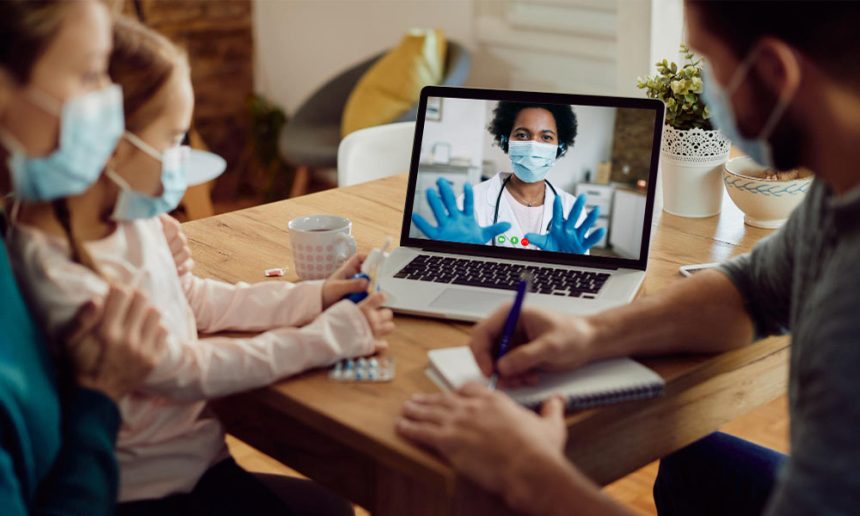
Healthcare is going through a major transformation, and one of the most important changes today is how future healthcare technology is transforming at-home care. In the past, patients had to rely heavily on hospitals, clinics, and frequent physical checkups. However, this traditional system is rapidly shifting toward a more flexible and technology-driven model.
In 2026, at-home care is no longer basic support. It is becoming advanced, intelligent, and highly personalized. With the help of artificial intelligence, wearable devices, telehealth platforms, and smart monitoring systems, patients can now receive continuous medical support without leaving their homes.
This shift is improving patient safety, reducing healthcare costs, and making treatment more accessible for people across the world.
1. Remote Patient Monitoring Is Redefining Home Healthcare
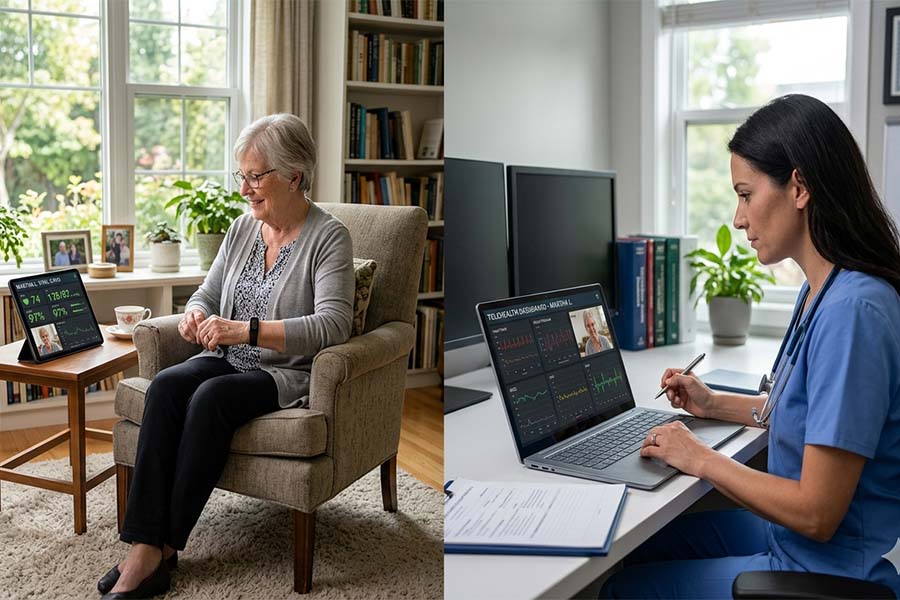
Remote patient monitoring (RPM) is one of the strongest examples of how future healthcare technology is transforming at-home care.
Patients now use smart medical devices that continuously track vital health data such as heart rate, blood pressure, oxygen levels, and glucose readings. The collected data is instantly sent to healthcare providers so they can keep track of the patient’s condition without delay.
Doctors can monitor patients from a distance and quickly respond if any abnormal patterns appear. This reduces the need for frequent hospital visits and helps manage chronic diseases more effectively.
For patients with diabetes, heart disease, or respiratory conditions, RPM has become an essential part of daily life.
2. Telehealth Is Becoming a Permanent Healthcare Solution
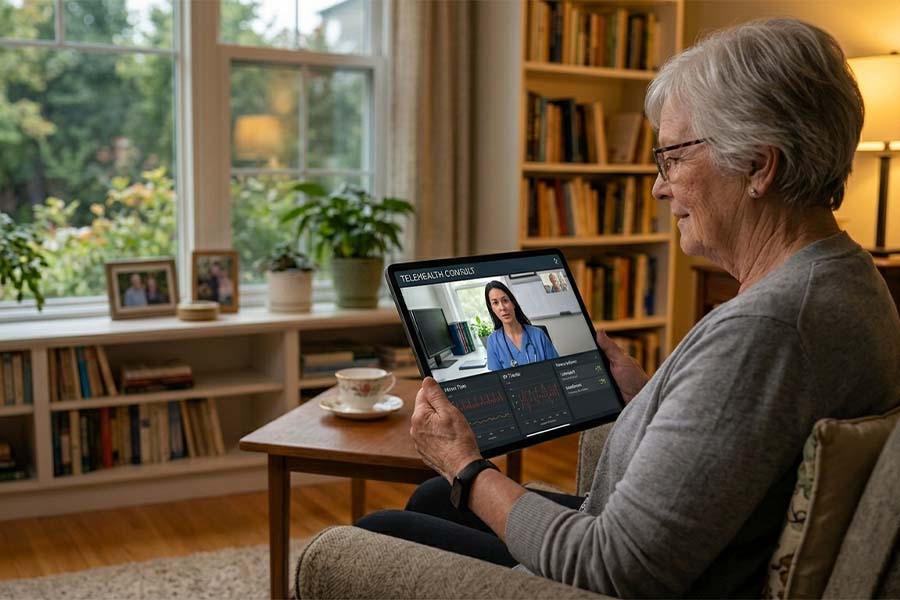
Telehealth has evolved from a temporary solution into a core healthcare service. Patients can now consult doctors through secure video calls without visiting clinics.
This is especially helpful for:
- Routine follow-ups
- Minor illnesses
- Mental health counseling
- Prescription renewals
Telehealth is also improving healthcare access in rural and remote areas where hospitals are not easily available. It saves time, reduces travel costs, and ensures faster medical support.
3. Wearable Devices Are Turning Into Personal Health Assistants
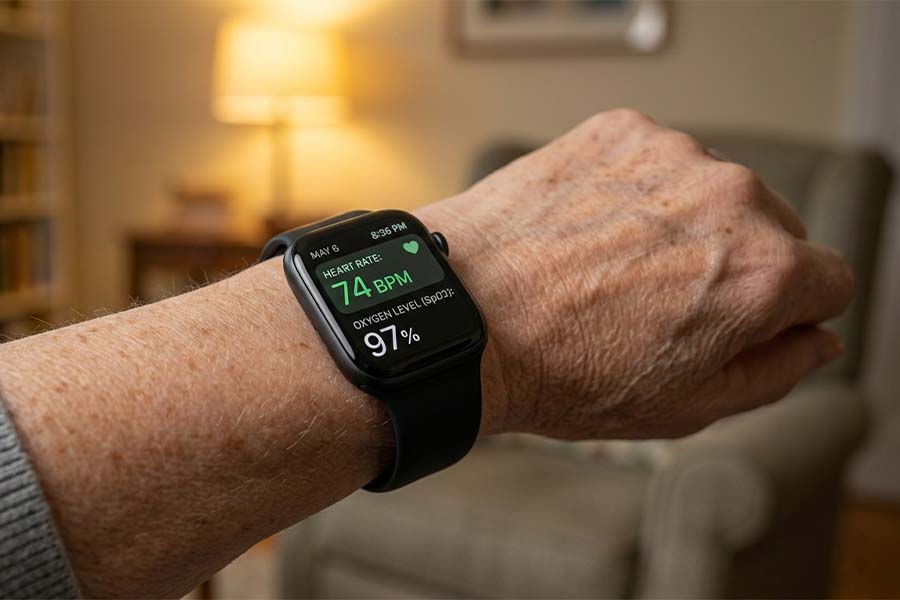
Wearable health technology is playing a major role in modern at-home care. Devices such as smartwatches and health trackers now provide advanced monitoring features.
They track sleep patterns, heart rhythms, stress levels, and oxygen saturation. Some advanced devices can even detect irregular heart activity and send emergency alerts.
This makes wearables powerful tools for early diagnosis and preventive healthcare, allowing patients to take action before conditions worsen.
4. Artificial Intelligence Is Enhancing Patient Care at Home
Artificial intelligence is deeply integrated into modern healthcare systems. AI tools help patients manage their daily health routines more efficiently.
These systems can:
- Send medication reminders
- Track symptoms over time
- Analyze health data patterns
- Suggest preventive actions
AI is also improving decision-making for doctors by providing predictive insights based on patient data. This helps identify risks earlier and reduce complications.
5. Smart Medication Systems Are Improving Treatment Accuracy
Medication management is one of the most important parts of home healthcare. Smart medication systems help ensure patients take the correct dosage at the right time.
These devices automatically dispense medicine and send alerts if doses are missed. They also notify caregivers in case of irregular usage.
This technology is especially useful for elderly patients or individuals managing multiple prescriptions, where mistakes can have serious consequences.
6. Hospital-at-Home Programs Are Expanding Rapidly
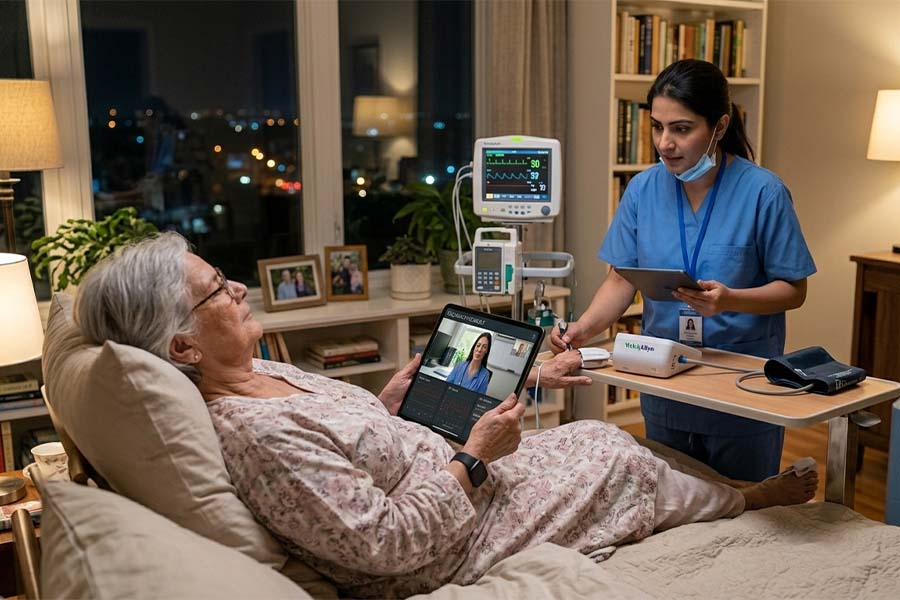
Hospital-at-home care is becoming a widely accepted healthcare model. It allows patients to receive hospital-level treatment in the comfort of their homes.
With the help of portable medical devices and remote monitoring, healthcare professionals can provide continuous care without requiring hospital admission.
This approach reduces hospital overcrowding, lowers costs, and improves patient comfort and recovery speed.
7. Voice Technology Is Making Healthcare More Accessible
Voice assistants are becoming an important part of at-home healthcare systems. Patients can use simple voice commands to manage their health.
They can set reminders, ask health-related questions, or contact emergency services without needing to navigate complex apps or devices.
This is particularly helpful for elderly patients or individuals with limited physical ability, making healthcare more inclusive and user-friendly.
8. Robotics Is Supporting Physical and Daily Care Needs
Robotics is slowly becoming part of home healthcare environments. Robots are now being used to assist with mobility, rehabilitation exercises, and basic caregiving tasks.
These systems help patients maintain independence while receiving physical support at home. Although still in development, robotic care is expected to grow significantly in the coming years.
It represents a major step forward in long-term patient support.
9. Predictive Analytics Is Preventing Medical Emergencies
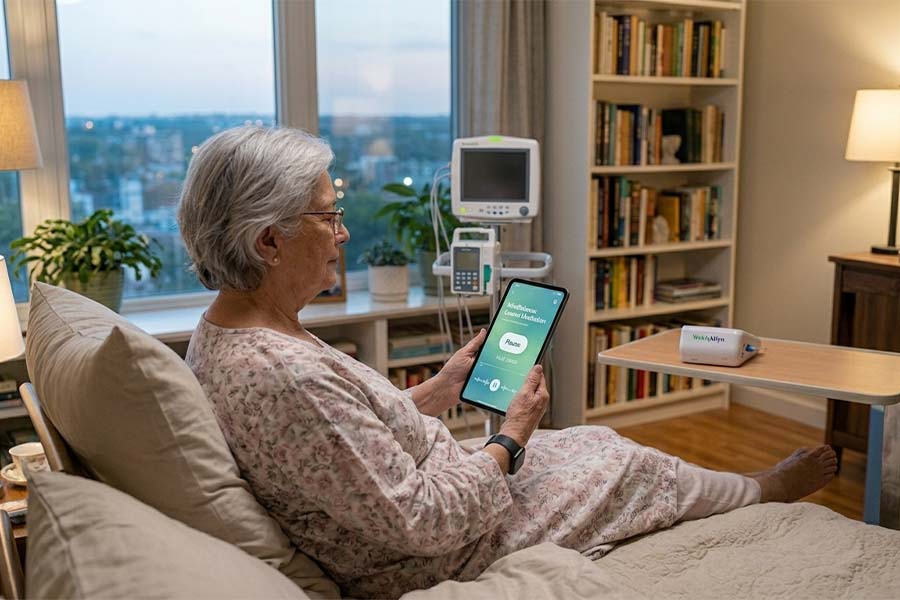
Predictive analytics is one of the most advanced applications in modern healthcare. It uses data and artificial intelligence to predict potential health risks before they become serious.
By analyzing patient history, lifestyle habits, and real-time data, these systems can identify warning signs early.
Doctors can then take preventive action, reducing the chances of emergencies and improving long-term health outcomes.
10. Mental Health Technology Is Expanding Home Support Systems
Mental health care has become a key focus in digital healthcare innovation. Mobile apps and online platforms now provide therapy sessions, stress management tools, and emotional support.
These tools allow patients to access mental health care privately and conveniently from home. This reduces stigma and encourages more people to seek help when needed.
How Emerging Healthcare Technology Is Changing At-Home Care
When we look at all these developments together, it becomes clear that how future healthcare technology is transforming at-home care is reshaping the entire healthcare system.
Homes are no longer just living spaces they are becoming connected health environments where patients can be monitored, treated, and supported continuously.
This transformation is driven by three major factors: improved technology, better connectivity, and increasing demand for personalized healthcare.
As a result, patients now have more control over their health, while doctors can provide more accurate and timely care.
Challenges in This Transformation
Even with major progress in healthcare technology, there are still several important challenges that need attention.
Since patient information is now stored and shared digitally, protecting it from unauthorized access has become extremely important. Healthcare systems must invest in stronger encryption and cybersecurity measures.
Another issue is usability. Many elderly patients struggle with using modern apps, wearable devices, or digital platforms. Without proper guidance and support, this technology can feel complicated for some users.
Cost is also a key barrier. Advanced medical devices and smart healthcare systems are still expensive, making them less accessible for some families. On top of that, reliable internet connectivity is required for most of these technologies to work properly, which is still not available everywhere.
Conclusion
To sum up, the way future healthcare technology is transforming at-home care is one of the most significant developments in modern healthcare. It is reshaping how patients receive treatment by making care more accessible, efficient, and tailored to individual needs.
From remote monitoring systems and wearable devices to artificial intelligence and virtual consultations, home-based healthcare is becoming more advanced every year.
As these technologies continue to improve, the focus of healthcare will shift more toward prevention, early detection, and patient independence. This will reduce the pressure on hospitals and help people manage their health more comfortably from their own homes.