







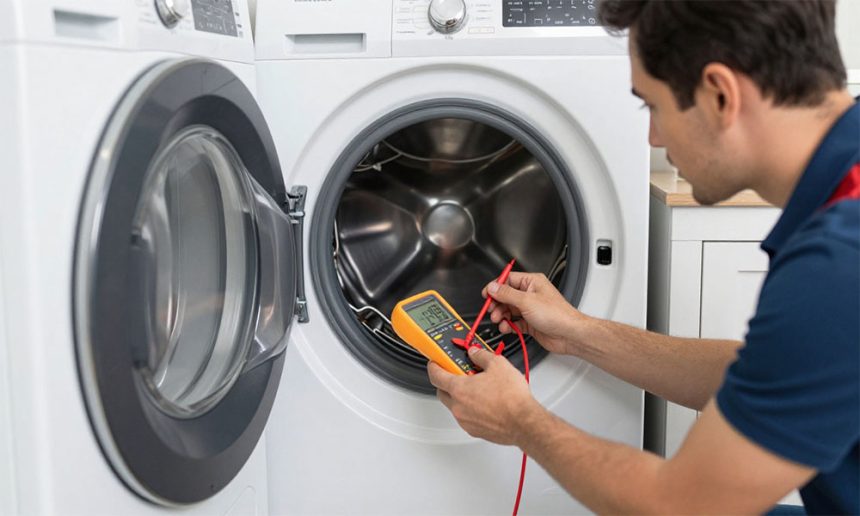
A Samsung dryer that spins normally but produces no heat can quickly turn laundry day into a frustrating experience. Many homeowners face this issue at some point, especially after years of regular use. If your Samsung dryer not heating properly, the problem could range from a clogged vent to a faulty heating element or blown thermal fuse.
The good news is that many heating problems can be diagnosed and sometimes fixed without replacing the entire appliance. This guide explains the most common causes, troubleshooting steps, and practical fixes to help restore your dryer’s heating performance.
Common Signs Your Samsung Dryer Has a Heating Problem
Before diagnosing the issue, it helps to recognize the warning signs. A dryer with heating issues may show symptoms such as:
- Clothes staying damp after a full cycle
- Dryer runs but produces cold air
- Drying cycles taking much longer than normal
- Burning smell from the dryer vent
- Dryer shutting off unexpectedly
- Error codes appearing on the control panel
If your Samsung dryer runs but no heat is being generated, one of several internal components may have failed.



Why Your Samsung Dryer Is Not Heating
There are multiple reasons a dryer may stop producing heat. Below are the most common causes behind a Samsung dryer heating issue.
1. Faulty Heating Element
The heating element is responsible for generating heat inside electric dryers. Over time, the metal coil can burn out or break.
Signs of a Bad Heating Element
- Dryer tumbles but never gets warm
- Clothes remain wet after multiple cycles
- No visible glow from the heating assembly
A damaged Samsung dryer heating element is one of the most common causes of heating failure.
How to Check It
- Unplug the dryer.
- Remove the back panel.
- Locate the heating element housing.
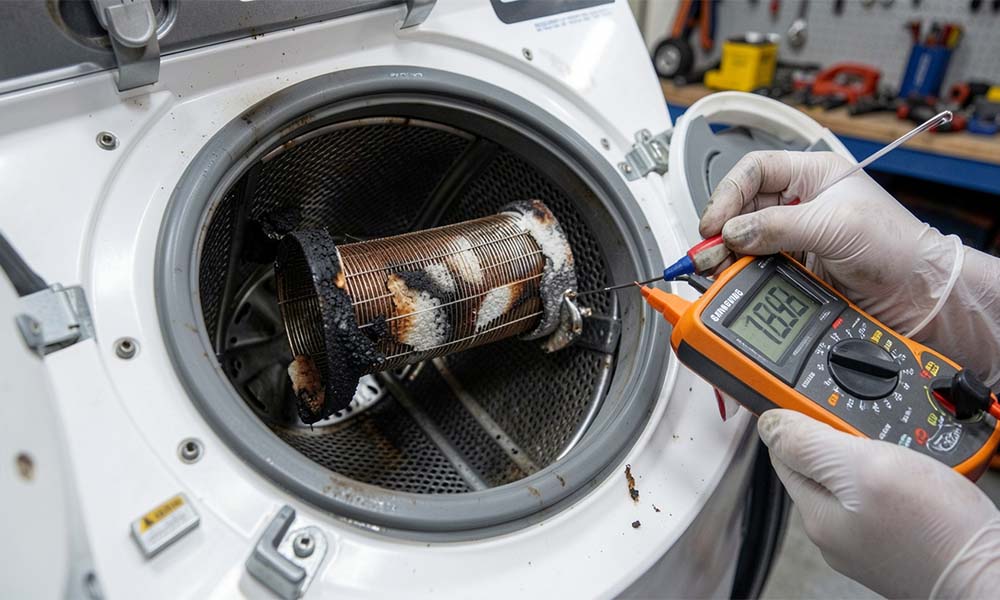
- Use a multimeter to test continuity.
If the element has no continuity, it needs replacement.
2. Blown Thermal Fuse
The thermal fuse acts as a built-in safety component that shuts down the heating system if the dryer becomes excessively hot. If airflow becomes restricted, the fuse can blow and stop the heating system from working.
A faulty Samsung dryer thermal fuse often causes:
- Dryer spinning but not heating
- Dryer suddenly stopping mid-cycle
- Complete loss of heat
Common Reasons the Fuse Blows
- Clogged dryer vent
- Excess lint buildup
- Blocked airflow
- Overheating issues
Replacing the fuse without fixing the airflow problem may cause the new fuse to fail again.
3. Clogged Dryer Vent
Poor airflow is another major reason a Samsung dryer not drying clothes properly.
When lint builds up inside the vent system:
- Heat gets trapped
- Moisture cannot escape
- Dryer overheats
- Drying performance drops
Signs of Vent Blockage
- Dryer exterior feels very hot
- Burning smell during operation
- Laundry room becomes humid
- Long drying times
How to Fix It
- Clean the lint filter
- Disconnect and vacuum the vent hose
- Remove lint from outside vent openings
- Check for crushed or bent ducts
Regular vent cleaning improves both performance and safety.
4. Defective Thermostat
A thermostat controls dryer temperature. If it fails, the dryer may stop heating entirely or overheat.

A Samsung dryer thermostat problem can cause:
- Inconsistent heating
- Dryer overheating
- Dryer staying cold
Types of Dryer Thermostats
- High-limit thermostat
- Cycling thermostat
- Thermal cutoff thermostat
Testing these components with a multimeter can help identify the faulty part.
5. Power Supply Problems
Many users forget that electric dryers require two separate 120V lines to create 240V power. If one breaker trips, the dryer may still run but won’t heat.
What to Check
- Reset the circuit breaker
- Confirm both breakers are ON
- Inspect damaged power cords
This issue is common in a Samsung electric dryer not heating situation.
6. Gas Supply Issues (Gas Models)
If you own a gas dryer, heating problems may come from:
- Closed gas valve
- Faulty igniter
- Defective gas valve coils
A Samsung gas dryer can continue spinning as usual even when the burner system stops generating heat inside the drum.
Signs of Gas Dryer Issues
- No flame ignition
- Clicking sounds without heat
- Intermittent heating
Gas dryer repairs may require professional service if gas components are involved.
7. Moisture Sensor Problems
Modern Samsung dryers use moisture sensors to detect dampness levels. If sensors become dirty or malfunction, the dryer may stop heating too early.
Symptoms
- Clothes slightly damp after cycle
- Dryer ending cycles prematurely
- Inconsistent drying results
A dirty Samsung dryer moisture sensor issue can often be fixed by cleaning the sensor bars with rubbing alcohol.
How to Reset a Samsung Dryer
Sometimes a simple reset may resolve temporary software or sensor issues.
Samsung Dryer Reset Steps
- Turn off the dryer.
- Unplug it for 5 minutes.
- Plug it back in.
- Restart a drying cycle.
This basic Samsung dryer reset may clear temporary glitches.
Step-by-Step Samsung Dryer Troubleshooting
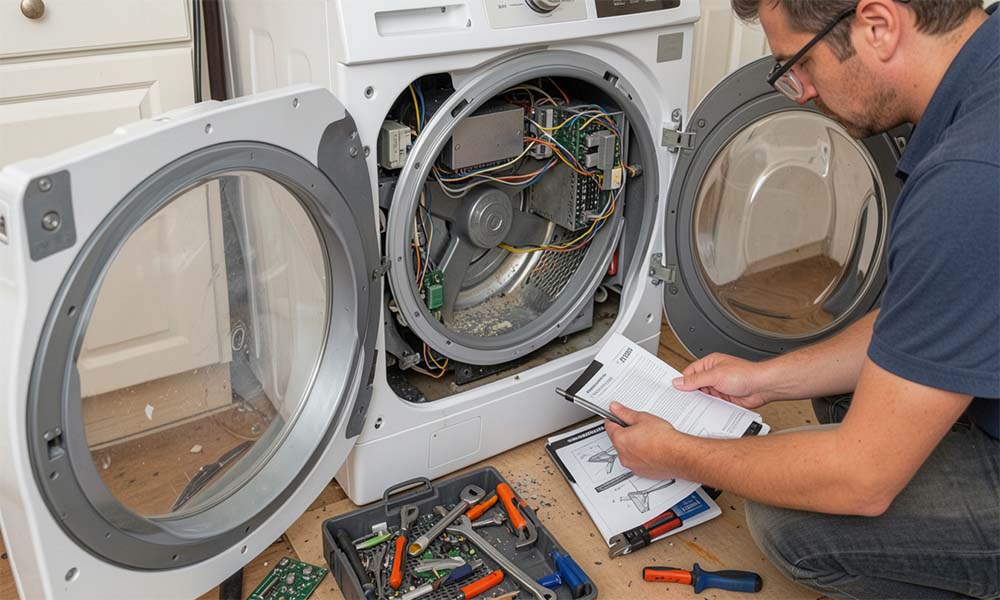
If your Samsung dryer not heating properly, follow these troubleshooting steps to identify the problem. Many heating issues are caused by airflow restrictions, faulty parts, or power supply problems.
Step 1: Check the Lint Filter
A clogged lint filter can block airflow and reduce heating performance. When air cannot circulate properly, the dryer may overheat or fail to dry clothes completely.
Remove the lint screen and clean away all lint buildup. If fabric softener residue is present, wash the filter with warm water and let it dry before reinstalling it.
Cleaning the filter after every load helps prevent common Samsung dryer heating issues.
Step 2: Inspect the Vent System
Blocked vents are a major reason a Samsung dryer not drying clothes properly. Lint buildup inside the vent hose can trap heat and moisture inside the dryer.
Disconnect the vent hose and check for lint, crushed sections, or blockages. Also inspect the outside exhaust vent for debris.
Cleaning the vent system improves airflow, drying performance, and safety.
Step 3: Verify the Power Supply
Electric dryers need a full 240V power supply to produce heat. Sometimes the dryer drum spins normally even when one breaker has tripped.
Inspect your home’s breaker panel and switch the dryer breaker back on if it has tripped. Also inspect the power cord for damage.
Power issues are common in a Samsung electric dryer not heating situation.
Step 4: Test the Heating Element
The heating element creates the hot air inside the dryer. If it burns out, the dryer may run without producing heat.
Unplug the dryer, remove the back panel, and test the element with a multimeter. If there is no continuity, the Samsung dryer heating element needs replacement.
This is one of the most common dryer heating failures.
Step 5: Inspect the Thermal Fuse
The thermal fuse is designed to stop the dryer from operating when internal temperatures become dangerously high. A blown Samsung dryer thermal fuse can stop the heating system completely.
Use a continuity tester or multimeter to inspect the fuse and install a new one if the current cannot pass through it. However, always fix airflow problems first because clogged vents often cause the fuse to fail.
Step 6: Check Thermostats
Dryer thermostats control internal temperature. If a thermostat becomes faulty, the dryer may stop heating or overheat.
Common signs include:
- No heat
- Uneven drying
- Dryer overheating
A bad thermostat is another reason a Samsung dryer runs but no heat.
Step 7: Examine Moisture Sensors
Samsung dryers use moisture sensors to detect damp clothes. Dirty sensors may stop the drying cycle too early.
Clean the sensor bars with a soft cloth and rubbing alcohol to remove residue buildup.
A dirty sensor can lead to a Samsung dryer moisture sensor issue where clothes remain slightly damp after drying cycles.
This complete Samsung dryer troubleshooting process helps identify most heating-related problems.
When to Call a Professional Technician
Some repairs are simple DIY jobs, while others require technical expertise.
You should contact a technician if:
- You smell gas
- Electrical wiring appears damaged
- Multiple components fail simultaneously
- Dryer repeatedly blows fuses
- Heating issues continue after replacement parts
Professional appliance repair may save time and prevent further damage.
How Much Does Samsung Dryer Repair Cost?
Repair costs vary depending on the failed component.
| Problem | Estimated Cost |
| Heating Element Replacement | $100–$250 |
| Thermal Fuse Replacement | $70–$150 |
| Thermostat Repair | $100–$200 |
| Vent Cleaning Service | $80–$180 |
| Gas Igniter Replacement | $150–$300 |
DIY repairs can reduce labor costs if you have proper tools and experience.
Prevent Future Samsung Dryer Heating Problems
Regular maintenance can help avoid future heating failures.
Maintenance Tips
- Clean the lint trap after every load
- Deep clean dryer vents every 6–12 months
- Avoid overloading the dryer
- Use proper drying cycles
- Inspect vent hoses regularly
- Keep airflow unrestricted
Routine maintenance extends appliance lifespan and improves efficiency.
Samsung Dryer Error Codes Related to Heating
Some Samsung dryers display error codes when heating issues occur.
| Error Code | Meaning |
| HC | Heating system problem |
| HE | Heating error |
| hE2 | Heater issue detected |
| tS | Temperature sensor problem |
Consult your dryer manual for model-specific troubleshooting instructions.
Final Thoughts
A Samsung dryer not heating can result from several issues, including airflow restrictions, a blown thermal fuse, defective thermostats, or a damaged heating element. Fortunately, many of these problems are fixable with proper troubleshooting and maintenance.
By following this guide, checking common components, and cleaning the vent system regularly, you can often restore your dryer’s heating performance without replacing the appliance. If the issue persists, professional appliance repair may be the safest solution to prevent additional damage and keep your dryer operating efficiently.