







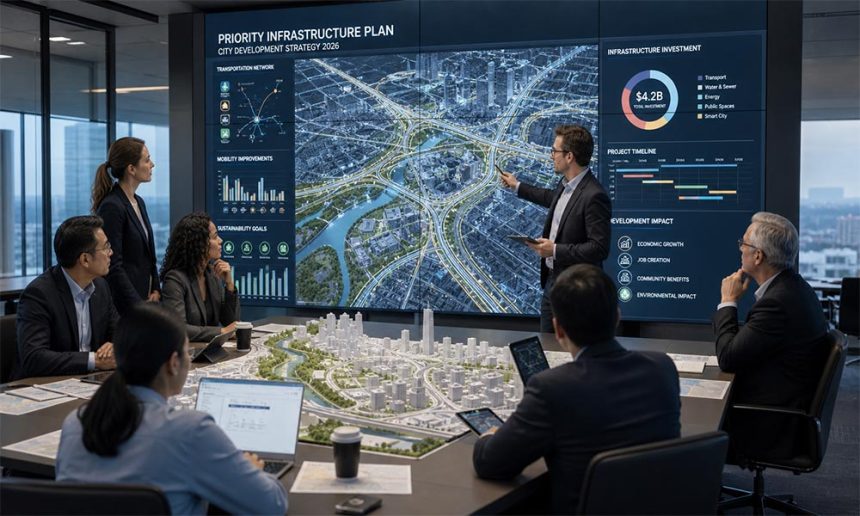
Modern cities are growing faster than ever. Rising populations, increased traffic, housing shortages, and aging public systems are forcing governments and urban planners to rethink how cities are built and managed. At this stage, a well-designed priority infrastructure plan plays a central role in guiding sustainable and organized urban growth.
A well-structured priority infrastructure plan helps cities identify the most urgent development needs and allocate resources efficiently. From transportation and housing to energy systems and public services, strategic infrastructure planning plays a major role in supporting long-term urban growth.
In 2026, cities across the world are focusing more on sustainable infrastructure planning, smart city development, and regional connectivity. A clear infrastructure strategy not only improves daily life for residents but also supports economic growth, business investment, and environmental sustainability.
What Is a Priority Infrastructure Plan?
A priority infrastructure plan is a long-term strategy that identifies the most important infrastructure projects needed for a city, region, or country. These plans help governments decide which public infrastructure projects should receive funding and attention first.
The main goal is to ensure that infrastructure development keeps pace with population growth and future economic demands. A typical infrastructure development plan may include:
- Transportation infrastructure projects
- Water and energy systems
- Public housing initiatives
- Healthcare and education facilities
- Digital connectivity and smart technology
- Environmental protection systems
Instead of reacting to urban problems after they occur, a priority infrastructure plan allows city leaders to prepare for future challenges in advance.
Why Modern Cities Need Strategic Infrastructure Planning
Urban areas are under increasing pressure due to rapid expansion. Roads become overcrowded, public transport systems struggle to handle demand, and utilities often fail to support growing populations.
Strategic infrastructure planning helps solve these issues by creating a roadmap for sustainable urban development. Cities that invest in organized infrastructure strategies are usually better prepared for economic shifts, climate challenges, and technological changes.
Some major reasons modern cities need infrastructure planning include:
Managing Population Growth
As cities expand, more people require housing, transportation, healthcare, and public services. Without proper planning, urban areas can become congested and inefficient.
A priority infrastructure plan helps cities manage growth while maintaining a higher quality of life.
Improving Transportation Networks
Efficient transportation infrastructure is critical for modern urban development. Roads, rail systems, bridges, and public transit projects reduce traffic congestion and improve regional connectivity.
Better transportation systems also support businesses by improving access to workers, customers, and supply chains.
Supporting Economic Development
Infrastructure investment strategies often create new jobs and attract private investment. Businesses are more likely to expand in cities with reliable transportation, stable utilities, and modern digital infrastructure.
Public infrastructure projects can also stimulate local economies through construction activity and long-term commercial growth.
Enhancing Sustainability
Modern infrastructure planning now focuses heavily on sustainability. Cities are investing in renewable energy systems, eco-friendly transportation, and green building initiatives.
Sustainable infrastructure planning helps reduce pollution, conserve resources, and support climate resilience.
Key Components of a Priority Infrastructure Plan
An effective priority infrastructure plan includes several important elements that work together to support urban growth.
Transportation Infrastructure
Transportation remains one of the most important parts of urban infrastructure strategy. Modern cities require efficient systems that allow people and goods to move safely and quickly.
Common transportation projects include:
- Highway expansion
- Public transit systems
- Smart traffic management
- Rail development
- Bicycle infrastructure
- Electric vehicle charging networks
These improvements reduce congestion while supporting long-term economic infrastructure development.
Housing and Community Development
Housing shortages are becoming a major issue in many growing cities. Infrastructure planning often includes residential expansion projects, affordable housing initiatives, and mixed-use developments.
Proper housing infrastructure supports balanced urban growth and improves living standards.
Energy and Utility Systems
Reliable energy and water systems are essential for any modern city. Infrastructure policy frameworks now prioritize sustainable energy sources and efficient utility management.
Important projects may include:
- Renewable energy systems
- Smart power grids
- Water treatment facilities
- Waste management systems
- Flood protection infrastructure
These systems improve environmental sustainability while supporting future population growth.
Digital and Smart City Infrastructure
Technology plays a larger role in urban planning than ever before. Smart city infrastructure allows governments to manage resources more efficiently using digital systems and data analysis.
Examples include:
- Smart traffic signals
- Public Wi-Fi networks
- Digital surveillance systems
- Intelligent energy management
- Online public services
Digital infrastructure improves efficiency and enhances public service delivery.
How Infrastructure Planning Supports Economic Growth
One of the biggest advantages of a priority infrastructure plan is its impact on economic growth.
Strong infrastructure creates opportunities for businesses, workers, and investors. Cities with advanced transportation systems and modern utilities are often more competitive in attracting investment.
Job Creation
Large infrastructure projects generate employment opportunities in construction, engineering, transportation, and technology sectors.
Long-term infrastructure development also supports indirect job growth by encouraging business expansion.
Increased Business Activity
Companies prefer locations with efficient transportation networks and reliable public services. Infrastructure improvements can lower operating costs and increase productivity.
Commercial development often follows major public infrastructure investments.
Higher Property Values
Improved roads, transit systems, and public services usually increase property demand. Residential and commercial property values often rise near major infrastructure developments.
This growth can strengthen local tax revenue and support future city projects.
The Role of Sustainability in Infrastructure Planning
In 2026, sustainability is a central focus of modern infrastructure development.
Governments are under pressure to reduce carbon emissions and prepare for climate-related risks. As a result, infrastructure strategies now prioritize environmental responsibility alongside economic growth.
Sustainable infrastructure planning may include:
- Green transportation systems
- Renewable energy projects
- Climate-resilient buildings
- Water conservation systems
- Eco-friendly construction methods
These efforts help cities reduce environmental impact while improving long-term resilience.
Challenges in Priority Infrastructure Planning
Although infrastructure planning offers many benefits, cities still face several major challenges.
Funding Limitations
Large infrastructure projects require significant financial investment. Governments often struggle to balance budgets while maintaining public services.
Public-private partnerships are increasingly used to support infrastructure funding strategies.
Political and Regulatory Delays
Infrastructure projects can face delays due to policy disagreements, environmental reviews, and permit approvals.
Long approval processes may slow down urban development initiatives.
Rapid Technological Change
Technology evolves quickly, making it difficult for cities to plan long-term infrastructure systems. Governments must create flexible strategies that can adapt to future innovation.
Climate and Environmental Risks
Extreme weather events and rising temperatures are forcing cities to rethink infrastructure resilience. Future projects must consider environmental sustainability and disaster preparedness.
Future Trends in Urban Infrastructure Development
Infrastructure planning continues to evolve as cities adopt smarter and more sustainable development strategies.
Some important future trends include:
- AI-powered traffic management systems
- Smart public transportation networks
- Renewable energy integration
- Green urban construction
- High-speed digital infrastructure
- Climate-resilient city planning
Cities that invest in forward-thinking infrastructure development plans will likely experience stronger economic growth and improved living conditions.
Conclusion
A priority infrastructure plan is no longer just a government document. It has become a critical tool for shaping modern urban development and preparing cities for future challenges.
From transportation and housing to sustainability and digital innovation, strategic infrastructure planning affects nearly every aspect of urban life. Well-planned infrastructure projects improve economic performance, strengthen public services, and create more sustainable communities.
As urban populations continue to grow in 2026, cities that prioritize smart and sustainable infrastructure planning will be better positioned for long-term success.