


Introduction
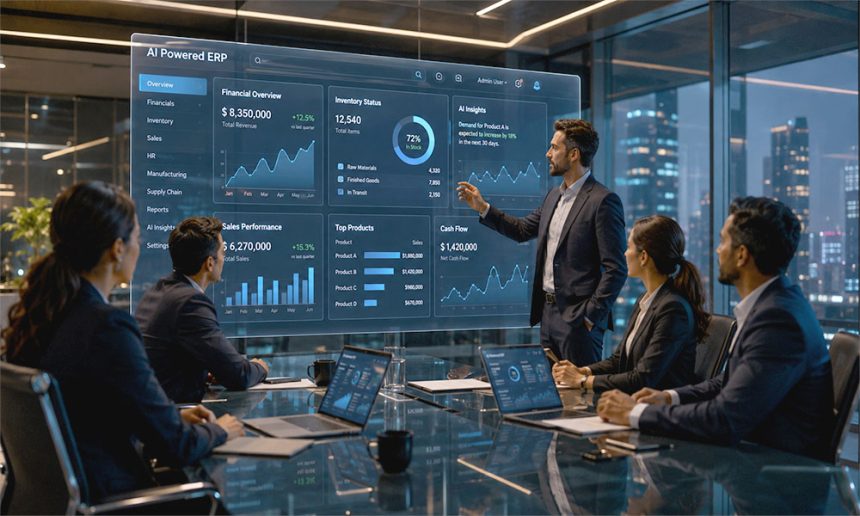
Businesses are changing rapidly, and companies now rely on automation and smart technology to improve daily operations. Traditional ERP software helped manage finance, inventory, sales, and HR, but modern businesses need more advanced solutions. This is where AI driven ERP systems are making a strong impact.
The future of Nusaker is closely linked with digital transformation and intelligent automation. Businesses want faster decision-making, better productivity, and lower operational costs. AI-powered ERP systems help achieve these goals by automating tasks, analyzing data, and improving overall efficiency.
What Are AI Driven ERP Systems?
AI driven ERP systems are advanced business management platforms that use artificial intelligence to improve enterprise operations. Unlike traditional ERP software, these systems can learn from business data and provide automated insights.
Modern ERP platforms can now perform tasks such as:
- Predicting inventory demand
- Automating financial reporting
- Detecting unusual transactions
- Improving customer support
- Optimizing supply chain management
For example, an AI-powered ERP system can predict when stock levels will run low based on customer purchasing behavior. This reduces delays and prevents inventory shortages. Similarly, finance departments can automate invoice processing and reduce human errors.
The future of Nusaker depends heavily on adopting these intelligent technologies because businesses are increasingly focusing on efficiency and automation.
Why Businesses Are Adopting AI Driven ERP Systems
Companies across different industries are investing in AI-based ERP solutions because they offer several long-term advantages. Businesses no longer want systems that only store information. They want platforms that can actively improve performance.
Improved Decision-Making
AI tools can process massive amounts of business data within seconds. This helps managers make informed decisions quickly.
Instead of spending hours reviewing spreadsheets, organizations receive automated reports, predictive insights, and performance recommendations. This saves time and improves operational accuracy.
Better Automation
One of the biggest advantages of AI driven ERP systems is automation. Repetitive tasks such as payroll processing, invoice approvals, and inventory tracking can be handled automatically.
Automation reduces manual workload and allows employees to focus on more valuable business activities.
Enhanced Customer Experience
Customer expectations are increasing every year. AI-powered ERP solutions can analyze customer behavior and improve communication strategies.
Businesses can personalize services, predict customer needs, and respond faster to support requests. As a result, companies build stronger customer relationships and improve retention rates.
Reduced Operational Costs
Many businesses spend large amounts of money on inefficient processes. AI systems help reduce unnecessary expenses by improving workflow efficiency and minimizing errors.
Organizations can also optimize resource management and avoid waste through predictive analytics.
The Future of Nusaker in Smart Enterprise Technology
The future of Nusaker represents a shift toward intelligent and connected business environments. Companies are no longer satisfied with traditional digital systems. They now seek platforms that can support innovation, scalability, and automation simultaneously.
AI driven ERP systems are expected to play a central role in this transformation. Businesses are increasingly integrating AI into every department, including:
- Finance
- Human resources
- Supply chain management
- Customer service
- Manufacturing
- Sales and marketing
This integration creates a smarter ecosystem where departments communicate seamlessly with each other.
For example, if sales demand increases unexpectedly, the ERP system can automatically notify inventory and production teams. This improves coordination and prevents delays.
In the future, Nusaker-style enterprise models may rely heavily on real-time data intelligence. Companies that adopt AI technologies early will likely gain a competitive advantage over slower competitors.



Key Features of Modern AI Driven ERP Systems
Modern ERP platforms offer far more than traditional business software. They combine machine learning, cloud computing, and automation tools to improve business performance.
Predictive Analytics
Predictive analytics helps companies forecast future outcomes using historical data.
Businesses can predict sales trends, customer behavior, and inventory requirements more accurately. This helps organizations prepare for market changes before problems occur.
Smart Reporting
Traditional reporting often requires manual data collection and analysis. AI-powered ERP systems automatically generate detailed reports in real time.
Managers can access dashboards that display financial performance, employee productivity, and operational insights instantly.
Natural Language Processing
Some advanced ERP platforms now include AI chat assistants and voice-command features.
Employees can ask questions such as:
- “What were last month’s sales?”
- “Show inventory shortages.”
- “Generate financial reports.”
The system responds instantly without requiring complex searches.
Cloud Integration
Cloud-based ERP systems offer flexibility and scalability. Businesses can access data from anywhere while maintaining secure storage and real-time collaboration.
Cloud integration also reduces hardware costs and simplifies software updates.
Challenges Businesses May Face
Although AI driven ERP systems offer many advantages, businesses may still face certain challenges during implementation.
High Initial Investment
Advanced ERP systems can require significant upfront costs. Small businesses may hesitate to invest due to budget limitations.
However, many organizations view this as a long-term investment because automation eventually reduces operational expenses.
Employee Training
Employees often need training to adapt to new technologies. Some workers may initially resist automation due to fear of change.
Businesses should provide proper support and training programs to ensure smooth adoption.
Data Security Concerns
AI systems process large amounts of sensitive business data. Companies must invest in cybersecurity measures to protect information from unauthorized access.
Strong encryption, regular updates, and secure cloud environments are essential for safe ERP implementation.
Industries Benefiting from AI Driven ERP Systems
Many industries are already experiencing major improvements through AI-powered ERP solutions.
Manufacturing
Manufacturers use AI to monitor production efficiency, predict equipment maintenance, and reduce downtime.
Smart ERP systems also improve supply chain coordination and inventory management.
Healthcare
Healthcare organizations use ERP software to manage patient records, billing systems, and medical inventory.
AI tools help improve scheduling, reduce paperwork, and support faster decision-making.
Retail
Retail businesses use predictive analytics to understand customer purchasing behavior and optimize stock levels.
This helps stores reduce overstocking and improve customer satisfaction.
Finance
Financial organizations rely on AI-driven ERP systems for fraud detection, automated reporting, and compliance management.
Automation also improves accuracy in financial operations.
How AI Will Shape Enterprise Growth in the Future
Artificial intelligence is likely to advance significantly in the coming years, becoming far more capable and influential than it is today. ERP systems will continue evolving from simple management tools into intelligent business assistants.
Future ERP platforms may include:
- Advanced machine learning algorithms
- Real-time predictive decision-making
- Automated strategic planning
- Intelligent virtual assistants
- Self-optimizing workflows
These innovations will allow businesses to operate faster and more efficiently than ever before.
The future of Nusaker will likely focus on building fully connected enterprises where every business process is driven by intelligent automation and real-time analytics.
Organizations that delay digital transformation may struggle to compete in increasingly technology-driven markets.
Conclusion
AI driven ERP systems are transforming how modern businesses operate. These intelligent platforms help organizations automate processes, improve decision-making, reduce costs, and deliver better customer experiences.
The future of Nusaker is strongly connected with smart enterprise technologies that prioritize automation, data intelligence, and operational efficiency. As businesses continue adapting to digital transformation, AI-powered ERP systems will become essential for long-term growth and competitiveness.
Companies that embrace these innovations today can position themselves for a more efficient and profitable future. While challenges such as implementation costs and employee training still exist, the long-term advantages often outweigh the difficulties.