


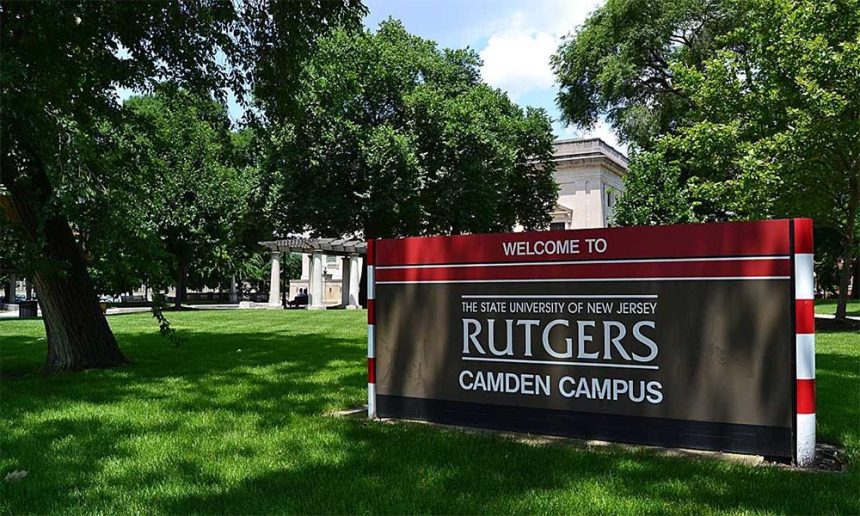
Understanding the Rutgers University acceptance rate is an important step for students planning to apply to one of the most respected public universities in the United States.
Rutgers University attracts a large number of applicants every year due to its strong academic reputation, wide range of programs, research opportunities, and relatively affordable tuition compared to private universities.
However, admission competitiveness is not the same across all campuses and majors, which makes it important for applicants to understand the full admissions landscape before applying.
This detailed guide explains everything about Rutgers admissions, including acceptance rates by campus, GPA expectations, SAT scores, admission requirements, deadlines, and strategies to improve admission chances.


Overview of Rutgers University
Rutgers University is a public research university located in New Jersey, USA, and was founded in 1766. It is one of the oldest higher education institutions in the United States and is widely recognized for academic excellence and research output.
The university operates across three major campuses:
- Rutgers–New Brunswick (flagship campus)
- Rutgers–Newark
- Rutgers–Camden
Each campus has its own academic environment, admission competitiveness, and program strengths. Rutgers–New Brunswick is the most selective campus and hosts the university’s most competitive schools, including business, engineering, and pharmacy programs.
Rutgers offers a broad range of academic disciplines such as business administration, engineering, computer science, nursing, pharmacy, social sciences, and biological sciences. This diversity makes Rutgers University admissions highly competitive in certain programs while more accessible in others.
Rutgers University Acceptance Rate 2026 (Complete Breakdown)
The Rutgers University acceptance rate varies depending on campus and program, but overall it remains moderately selective compared to many top U.S. universities.
Admission Statistics Overview
| Campus | Acceptance Rate |
| Rutgers–New Brunswick | 58% – 65% |
| Rutgers–Newark | 70% – 78% |
| Rutgers–Camden | 72% – 80% |
| Overall Rutgers University acceptance rate | ~79% |
These numbers show that Rutgers admission is not extremely competitive at the university level, but it becomes significantly more selective at the program level, especially in high-demand fields.
What These Numbers Actually Mean
A higher acceptance rate does not guarantee admission. Rutgers still receives tens of thousands of applications each year, and admission officers carefully evaluate academic strength, coursework rigor, and overall student profile.
In practice, students applying to flagship programs such as engineering or business face much tougher competition than the overall Rutgers University acceptance rate suggests.
Rutgers University Admissions Process
Rutgers follows a holistic admissions process, which means decisions are based on multiple factors rather than a single test score or GPA.
Key Evaluation Factors:
- High school GPA and academic performance
- Strength of coursework (AP, IB, Honors classes)
- SAT or ACT scores (optional in most cases)
- Extracurricular activities and achievements
- Leadership roles and community involvement
- Personal academic consistency
- Application quality and writing strength
The Rutgers admissions statistics reflect that students who show consistent academic performance and strong course rigor tend to have higher admission success rates, even if their test scores are average.
Rutgers Admission Requirements 2026
To apply successfully, students must meet basic Rutgers admission requirements.
Standard Requirements:
- Completed online application
- Official high school transcripts
- Application fee submission
- Academic history review
- Optional SAT/ACT scores
- English proficiency proof (for international students)
International Student Requirements:
International applicants must also provide:
- TOEFL, IELTS, or Duolingo English Test scores
- Certified academic transcripts
- Financial documentation for visa processing
- Passport copy
The Rutgers acceptance rate for international students remains competitive, especially in STEM-related programs where applicant volume is high.
Rutgers Average GPA Requirements
Among all admission criteria, GPA remains one of the strongest indicators considered in Rutgers’ selection process.
Students applying to Rutgers are expected to demonstrate strong academic consistency throughout high school.
Average GPA of Admitted Students:
| Program | GPA Range |
| Rutgers–New Brunswick | 3.7 – 4.2 |
| Business School | 3.8 – 4.3 |
| Engineering | 3.9 – 4.3 |
| Nursing | 3.9 – 4.4 |
| Pharmacy | 4.0+ |
The Rutgers GPA requirements show that competitive programs require nearly top-level academic performance. Students with slightly lower GPAs may still be admitted, but usually into less competitive majors or campuses.
Rutgers Average SAT Score & Test Policy
Rutgers follows a test-optional policy for most applicants, but standardized test scores can still strengthen an application.
SAT Score Breakdown:
| Section | Score Range |
| Evidence-Based Reading & Writing | 640 – 730 |
| Math | 660 – 770 |
| Total SAT Score | 1300 – 1500 |
The Rutgers average SAT score for admitted students is around 1400, especially for New Brunswick admissions.
ACT Score Range:
- Average ACT: 30–32
- Competitive range: 28–34
While test scores are optional, submitting strong SAT or ACT results can significantly improve Rutgers admission chances for competitive majors.
Is Rutgers Hard to Get Into?
The difficulty of admission depends on both campus and program selection.
Rutgers–New Brunswick is the most competitive campus, while Newark and Camden are relatively less selective.
Competitive Programs Include:
- Rutgers Business School acceptance rate (lower than university average)
- Rutgers Engineering acceptance rate (highly competitive)
- Nursing programs
- Pharmacy programs
- Computer Science programs in some cases
This means that while the overall Rutgers University acceptance rate appears moderate, individual programs can be significantly more selective.
Rutgers Admission Deadlines 2026
Meeting deadlines is essential for maximizing admission opportunities.
Key Dates:
- Early Action Deadline: November 1
- Regular Decision Deadline: December 1
- Admission Decisions: February–April (varies by program)
Applying early can improve chances in competitive programs, as Early Action applicants are reviewed sooner and may have access to limited seats in certain majors.
Rutgers Acceptance Rate by Major
Different academic programs have different levels of selectivity, which is an important part of Rutgers admissions statistics.
| Major | Selectivity Level |
| Business Administration | High |
| Engineering | Very High |
| Nursing | Very High |
| Pharmacy | Extremely High |
| Arts & Sciences | Moderate |
| Education | Moderate |
Understanding Rutgers acceptance rate by major is important because admission difficulty can vary more by program than by campus.
How to Improve Your Admission Chances
Even though the Rutgers University acceptance rate is relatively favorable compared to elite private universities, competition in top programs requires strong preparation.
Effective Strategies:
- Maintain a GPA above 3.8 consistently
- Take AP, IB, or Honors courses
- Build strong extracurricular involvement
- Show leadership in school or community activities
- Focus on academic improvement over time
- Submit a well-written application essay
- Apply early when possible
Admissions officers at Rutgers value consistency, academic rigor, and personal growth rather than isolated achievements.
Why Rutgers University Is a Strong Choice
Rutgers continues to attract thousands of applicants every year because of its academic and career advantages.
Students choose Rutgers for:
- Strong national academic reputation
- Affordable tuition for in-state students
- Access to major research facilities
- Internship opportunities near New York City and Philadelphia
- Large and active alumni network
- Diverse student population
These advantages contribute to the steady demand reflected in Rutgers University admissions.
Conclusion
The Rutgers University acceptance rate shows that the university is moderately selective overall, but admission competitiveness increases significantly in high-demand programs such as business, engineering, nursing, and pharmacy.
Understanding Rutgers admission requirements, GPA expectations, SAT score ranges, deadlines, and program-level selectivity is essential for building a strong application strategy. Students who maintain strong academics, take rigorous coursework, and prepare their applications carefully have a realistic and competitive chance of gaining admission to Rutgers University in 2026.