


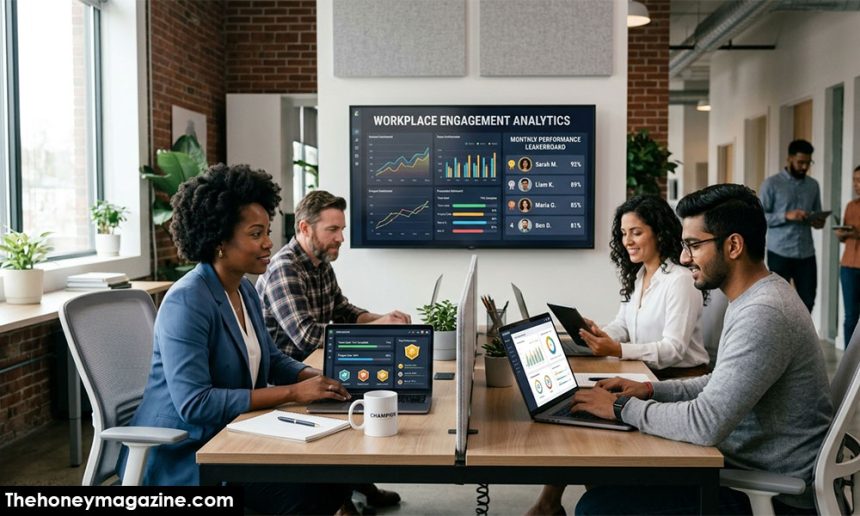
Modern workplaces are changing faster than ever, especially as companies look for practical ways to keep employees motivated without relying only on traditional reward systems. One emerging direction in this space is the idea often discussed under xendit work gamificationsummit, which reflects how gamification principles can be applied to workplace environments, employee engagement systems, and performance tracking models in a structured and measurable way.
Instead of treating work as a purely routine-based structure, organizations are now exploring systems where progress is visible, achievements are acknowledged in real time, and employees feel a stronger sense of direction. This shift is not about turning work into a game in a literal sense but about using proven behavioral techniques to improve motivation, consistency, and collaboration across teams.
How Workplace Gamification Is Reshaping Employee Engagement
Workplace engagement has become a major concern for organizations because traditional evaluation systems often fail to maintain continuous motivation. Annual reviews and delayed feedback cycles do not reflect day-to-day effort, which is where gamification-inspired systems create a noticeable difference.
In models associated with xendit work gamificationsummit, engagement is built around visibility of progress and immediate recognition. Employees can see how their actions contribute to larger goals, which naturally increases involvement in tasks. When individuals understand their impact in real time, they tend to stay more consistent and focused on outcomes rather than just completing tasks mechanically.

This approach also encourages behavioral alignment, where employees gradually adjust their performance patterns based on feedback loops rather than periodic evaluations. Over time, this creates a more active and responsive workplace culture.
Core Features of Modern Gamified Work Systems
Organizations that apply gamification principles typically rely on structured systems that combine motivation, tracking, and recognition. These features are designed to improve transparency and encourage steady performance improvement across teams.
| Feature | Description |
| Achievement Tracking | Records milestones and completed goals in real time |
| Performance Visibility | Shows progress dashboards for individuals and teams |
| Reward Mechanisms | Offers points, badges, or incentives for completed tasks |
| Team Challenges | Encourages collaboration through shared objectives |
| Feedback Loops | Provides continuous performance updates |
Each of these features works together to create an environment where employees are not waiting for long-term recognition but instead experience ongoing acknowledgment. This continuous reinforcement plays a major role in shaping motivation patterns and improving consistency.
Achievement tracking is especially important because it breaks larger responsibilities into smaller, measurable milestones. When employees can see incremental progress, complex tasks feel more manageable, and completion rates tend to improve.
Benefits of Gamification in Workplace Systems
The benefits associated with workplace gamification extend beyond simple motivation. In structured implementations like those discussed under xendit work gamificationsummit, the impact is often visible across productivity, engagement, and organizational culture.
One of the most noticeable improvements is in employee engagement levels. When recognition becomes frequent and tied directly to performance actions, employees feel more connected to their work environment. This reduces disengagement and helps maintain steady output even during repetitive tasks.
Another important benefit is improved productivity. Gamified systems naturally encourage employees to complete tasks more efficiently because progress is continuously measured. Instead of working toward distant goals, employees operate within smaller achievement cycles that feel more achievable.
Learning and development also benefit significantly. Training modules become more interactive when progress tracking and achievement markers are introduced. Employees are more likely to complete learning paths when they can see advancement clearly and receive acknowledgment for it.
Other key benefits include:
- Stronger motivation through visible progress indicators
- Better alignment between individual goals and company objectives
- Improved collaboration through team-based challenges
- Higher retention due to consistent recognition systems
- Increased accountability across departments
Each of these outcomes contributes to a more stable and performance-driven work environment when implemented correctly.
Real-World Applications Across Different Work Environments
Gamification strategies are not limited to a single industry. In fact, the principles associated with xendit work gamificationsummit can be adapted across multiple business functions depending on organizational needs and structure.
In sales teams, for example, performance tracking is often already data-driven. Adding gamified elements such as milestone rewards and leaderboard systems enhances motivation without changing the core workflow. Employees can track progress toward targets in a more interactive way, which improves consistency in performance.
Customer support teams also benefit from structured recognition systems. Metrics like response time, customer satisfaction scores, and resolution efficiency can be transformed into achievement-based systems that reward quality performance. This encourages agents to maintain high service standards over time.
In corporate training environments, gamification helps solve one of the most common challenges: low completion rates. By introducing structured progress tracking and reward-based milestones, employees are more likely to complete training programs and retain information effectively.
Remote and hybrid workplaces also find value in gamified systems. Since physical interaction is limited, virtual engagement tools help maintain connection between teams. Shared challenges, digital recognition boards, and collaborative goals help create a sense of unity even in distributed environments.
Challenges and Best Practices for Implementation
While gamification offers several advantages, it must be implemented carefully to avoid unintended consequences. One of the most common challenges is overemphasis on competition. If not balanced properly, employees may focus only on rankings rather than collaboration and quality of work.


Another challenge is reward fatigue. If incentives become repetitive or lose perceived value over time, engagement levels may decline. This is why reward systems need periodic updates and personalization options.
Successful implementation generally follows a few key principles:
- Clear definition of goals and expected behaviors
- Balanced focus on both individual and team performance
- Transparent tracking systems that build trust
- Flexible reward structures that match employee preferences
- Regular feedback collection to improve the system
When these principles are followed, gamification becomes a sustainable engagement model rather than a temporary motivational tool.
Practical Use Cases in Business Operations
The flexibility of gamified systems allows them to be applied across different operational areas without major structural changes. In onboarding processes, for example, new employees can follow step-by-step achievement paths that guide them through company policies, tools, and culture.
In project management, teams can track milestones in a more visual and engaging format. Instead of viewing tasks as isolated responsibilities, employees see how their contributions align with overall project completion.
Even in leadership development programs, gamification can support skill-building by assigning progressive challenges that reflect real managerial scenarios. This helps employees develop confidence while receiving structured feedback.
Conclusion
The concept behind xendit work gamificationsummit reflects a broader shift in how organizations approach employee motivation and performance management. Instead of relying only on periodic evaluations, companies are now adopting systems that emphasize continuous feedback, visible progress, and structured recognition.
When implemented thoughtfully, gamification can improve engagement, strengthen collaboration, and support long-term productivity growth. Its success depends on balance, clarity, and alignment with employee expectations, ensuring that motivation remains consistent without creating unnecessary pressure.
As workplaces continue evolving, systems built on gamification principles are likely to become a standard part of modern organizational strategy rather than a temporary innovation.