


Introduction
A temporary identity certificate is an official document used as short-term proof of identity when a person cannot provide permanent identification. It is commonly issued during emergencies, document replacement procedures, immigration cases, or verification processes.
Many services today require identity verification for travel, banking, healthcare, education, and employment. If someone loses a passport, ID card, or other important document, a temporary identity certificate can help them continue essential activities while waiting for a replacement.
Although the rules vary by country, the purpose of this certificate is simple. It provides temporary legal identification until a permanent document becomes available.
What Is a Temporary Identity Certificate?
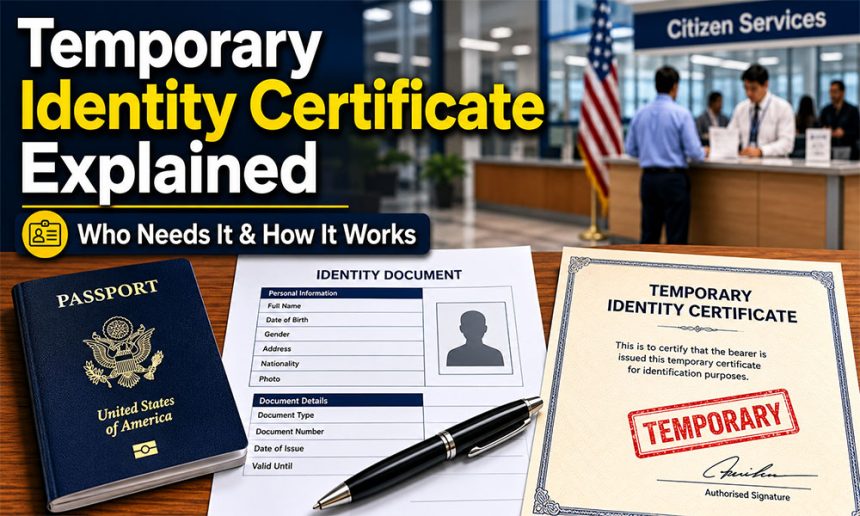
A temporary identity certificate is a short-term identification document issued by a government authority, embassy, immigration office, or other approved institution. The certificate confirms that the holder’s identity has been verified through available records or supporting documents.


This certificate is not usually meant to replace a permanent ID forever. Instead, it serves as an interim solution during situations where a person is waiting for official identification to be renewed, replaced, or processed.
In many cases, the certificate contains:
- Full legal name
- Date of birth
- Photograph of the holder
- Temporary identification number
- Issue and expiration dates
- Official stamp or signature
The information included may vary depending on the issuing authority and the reason for the request.
Who Needs a Temporary Identity Certificate?
Different groups of people may require a temporary identity certificate for different reasons. Some situations are unexpected, while others are part of official procedures.
People Who Lost Their Identification Documents
One of the most common reasons for requesting a temporary identity certificate is the loss of important documents. If someone loses a passport, national ID card, or driving license, they may need temporary identification while applying for replacements.
This helps them continue essential activities such as:
- Traveling within approved limits
- Accessing government services
- Verifying identity for work or banking
- Completing legal procedures
Without temporary identification, daily activities can become difficult and stressful.
Travelers Facing Emergencies Abroad
Travelers sometimes lose passports during international trips. In these situations, embassies or consulates may issue temporary identity certificates or emergency travel documents.
These documents help travelers prove their identity and return home safely. However, the validity period is usually limited, and the certificate may only be accepted for specific travel purposes.
Immigrants and Refugees
Immigration authorities may issue temporary identity certificates to refugees, asylum seekers, or immigrants while their legal status is under review. Since permanent documents often take time to process, temporary identification helps individuals access important services.
This can include:
- Housing support
- Healthcare access
- Educational enrollment
- Employment verification
The document provides basic identity recognition during the waiting period.
Students and Workers
Students or workers may also require temporary identification if their official documents are being renewed or updated. Educational institutions and employers sometimes accept temporary identity certificates for verification purposes.
This is especially helpful when processing delays could affect admission, salary payments, or workplace registration.
How Does a Temporary Identity Certificate Work?
The process usually starts when a person reports missing, damaged, or delayed identification documents. Authorities then review supporting records to confirm identity before issuing a temporary certificate.
The process often includes the following steps:



- Submit an application
- Provide supporting documents
- Complete identity verification
- Pay any required fee
- Receive the temporary certificate
Depending on the country or institution, the process may take a few hours or several days.
In most cases, the certificate remains valid only for a limited period. Once the permanent identification document is ready, the temporary certificate usually becomes invalid automatically.
Documents Usually Required
The exact requirements vary, but authorities commonly ask applicants to provide supporting evidence before issuing a temporary identity certificate.
Commonly requested documents include:
- Birth certificate
- Passport copy
- Expired ID card
- Police report for lost documents
- Proof of address
- Passport-size photographs
Some authorities may also require biometric verification or witness confirmation to reduce fraud risks.
Benefits of a Temporary Identity Certificate
A temporary identity certificate offers several practical advantages during emergencies or administrative delays.
Helps Maintain Daily Activities
People often need identification for routine tasks such as banking, travel, healthcare, or employment. Temporary certificates reduce disruptions while permanent documents are being processed.
Without temporary identification, even simple activities may become complicated.
Supports Legal Verification
Authorities and organizations need proof of identity before approving many services. A temporary identity certificate provides official confirmation that the person’s identity has already been reviewed.
This creates a safer and more organized verification process.
Reduces Stress During Emergencies
Losing essential identification papers often causes concern, especially in situations like travel or relocation. Temporary certificates help individuals handle urgent situations more smoothly while waiting for permanent replacements.
For many people, this document provides peace of mind during difficult circumstances.
Limitations of a Temporary Identity Certificate
Although temporary identity certificates are useful, they also have certain limitations.
Limited Validity Period
Most certificates are valid only for a short time. Some remain active for a few weeks, while others may last several months depending on the situation.
After expiration, the holder must obtain permanent identification or renew the temporary document if allowed.
Restricted Acceptance
Not every organization accepts temporary identity certificates. Some financial institutions, airlines, and companies may not accept temporary documents and prefer official permanent ID instead.
Because of this, users should always confirm acceptance rules before relying on the certificate for important tasks.
Possible Usage Restrictions
Certain certificates are issued only for specific purposes. For example, an emergency travel certificate may only allow return travel to the holder’s home country.
The permitted use depends on the issuing authority and the reason for issuance.
Tips for Using a Temporary Identity Certificate
People using temporary identity certificates should handle them carefully to avoid complications.
Here are some useful tips:
- Keep both digital and printed copies
- Check the expiration date regularly
- Confirm acceptance before traveling
- Store the document securely
- Apply for permanent ID as soon as possible
Following these steps can prevent unnecessary delays or verification problems.
Conclusion
A temporary identity certificate is a short-term document that helps people prove their identity during emergencies, delays, or while replacing lost documents. It is commonly used by travelers, students, workers, immigrants, and others who lose or wait for official identification.
While it cannot replace a permanent ID, it provides enough legal recognition to continue essential tasks. It also makes verification easier for governments, employers, and service providers.
As identity checks become more common worldwide, temporary identity certificates are becoming increasingly important. Understanding how they work helps people handle unexpected identification issues more smoothly.